
Why IT Teams Prefer Predictable Printing Infrastructure
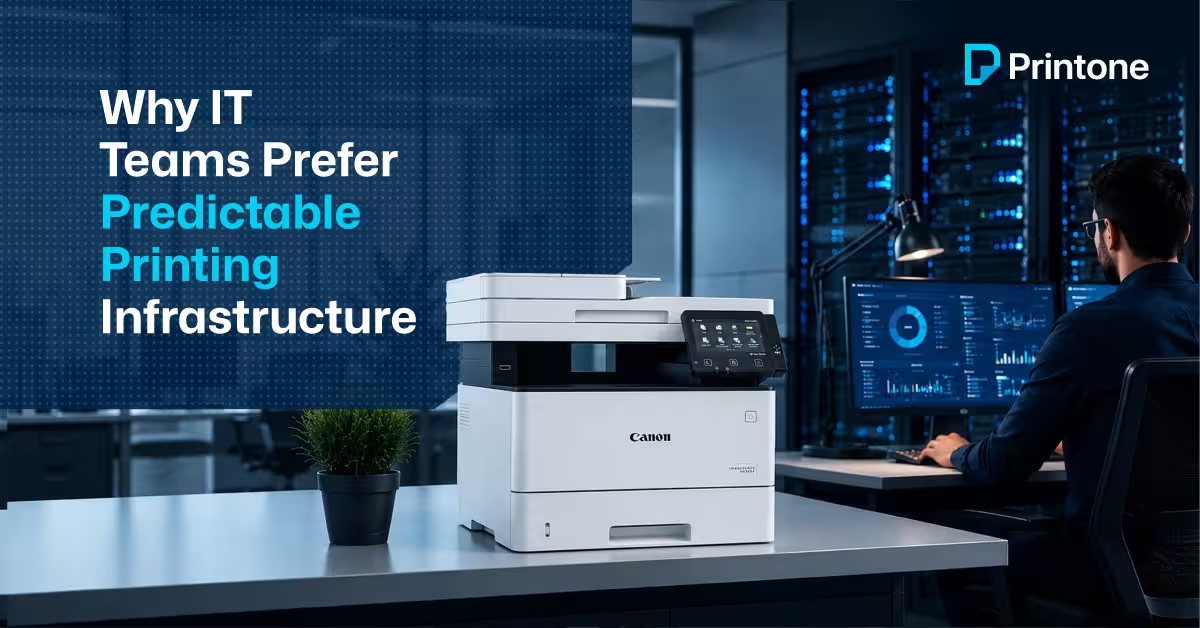
For most IT teams, success is measured by stability.
If the network is secure, systems are available and users can work without interruption, they’ve done their job well.
Printing should be no different.
Yet in many organisations, printers remain one of the least standardised and most reactive parts of the IT environment. Different brands, ageing devices, inconsistent drivers and frequent maintenance requests create unnecessary complexity for teams already managing critical business systems.
After years of working with IT departments across the UAE, we’ve noticed one consistent trend. The goal is rarely to have more printers. It’s to have fewer problems.
That is why predictable printing infrastructure has become a priority.
Printing Shouldn’t Compete for IT Resources
Modern IT departments are responsible for far more than keeping computers online.
They’re managing cybersecurity, cloud platforms, Microsoft 365 environments, business applications, network performance and endpoint security. Every hour spent troubleshooting printer issues is an hour taken away from strategic initiatives.
Unfortunately, printers often become repeat offenders.
A paper jam here.
A driver conflict there.
A toner alert.
A network connection issue.
Individually, these problems seem minor. Collectively, they consume valuable time and interrupt the IT team’s workflow.
Reliable printing allows IT professionals to focus on technology that drives the business forward, rather than constantly responding to avoidable support requests.
Standardisation Reduces Complexity
One of the biggest challenges in growing organisations is inconsistency.
Different departments purchase different printer models.
Some devices are nearing the end of their lifecycle while others require different consumables, firmware and maintenance schedules.
This fragmented environment makes support unnecessarily difficult.
Standardising the print fleet simplifies everything.
Users receive a consistent experience.
IT teams manage fewer drivers and configurations.
Maintenance becomes more predictable.
Training requirements are reduced.
When every device follows the same operational standards, managing the environment becomes significantly easier.
Downtime Doesn’t Stay in the IT Department
When a printer fails, the support ticket may be assigned to IT.
The impact, however, is felt across the business.
Finance cannot process invoices.
HR delays employee documentation.
Sales teams wait for proposals.
Operations pause dispatch paperwork.
What begins as a technical issue quickly becomes an operational issue.
This is why experienced IT managers focus on reducing downtime rather than simply fixing faults when they occur.
Predictability Makes Planning Easier
Unexpected failures are difficult to manage.
Predictable infrastructure is not.
When devices are monitored, maintained and replaced according to a planned lifecycle, businesses avoid emergency repairs and unplanned disruptions.
IT teams gain better visibility into the print environment.
Budgeting becomes easier.
Support becomes proactive instead of reactive.
Most importantly, users experience fewer interruptions.
Predictability isn’t just about maintenance. It’s about creating an environment where technology performs consistently every day.
Security Is No Longer Optional
Office printers have evolved into intelligent network devices.
They store data, connect to corporate networks and often process confidential information.
Without proper configuration and regular updates, they can introduce unnecessary security risks.
A professionally managed print environment ensures that firmware updates, security settings and device configurations remain current.
For organisations handling financial records, legal documents or sensitive customer information, this level of control is becoming increasingly important.
Why Businesses Are Moving Towards Printer for Rent
Many organisations are rethinking the way they manage office printing.
Instead of purchasing devices and handling every aspect internally, they’re choosing professionally managed printer for rent solutions.
This approach provides more than equipment.
It delivers a managed printing environment that includes:
- Professional installation and configuration
- Preventive maintenance
- Genuine consumables
- Fast technical support
- Performance monitoring
- Planned equipment upgrades
- Predictable monthly operating costs
For IT teams, this means fewer support requests, fewer unexpected failures and greater confidence that the print environment will perform as expected.
Printing Should Support Your IT Strategy
Technology investments are made to improve efficiency, strengthen security and support business growth.
Printing should contribute to those same objectives.
When the print environment is standardised, proactively maintained and professionally managed, it becomes another reliable part of the organisation’s infrastructure instead of another source of support tickets.
That allows IT teams to spend less time solving recurring printer issues and more time delivering the projects that create real business value.
A predictable printing infrastructure doesn’t just benefit the IT department.
It benefits every employee who depends on uninterrupted access to information, every manager who relies on timely documentation and every organisation that values operational efficiency.
Because the best print environment is the one that quietly supports the business without demanding attention.
Comments are closed